Ecuador Just Announced a $2.43 Billion Plan to End Blackouts — Here's What's Actually in It
 Chip Moreno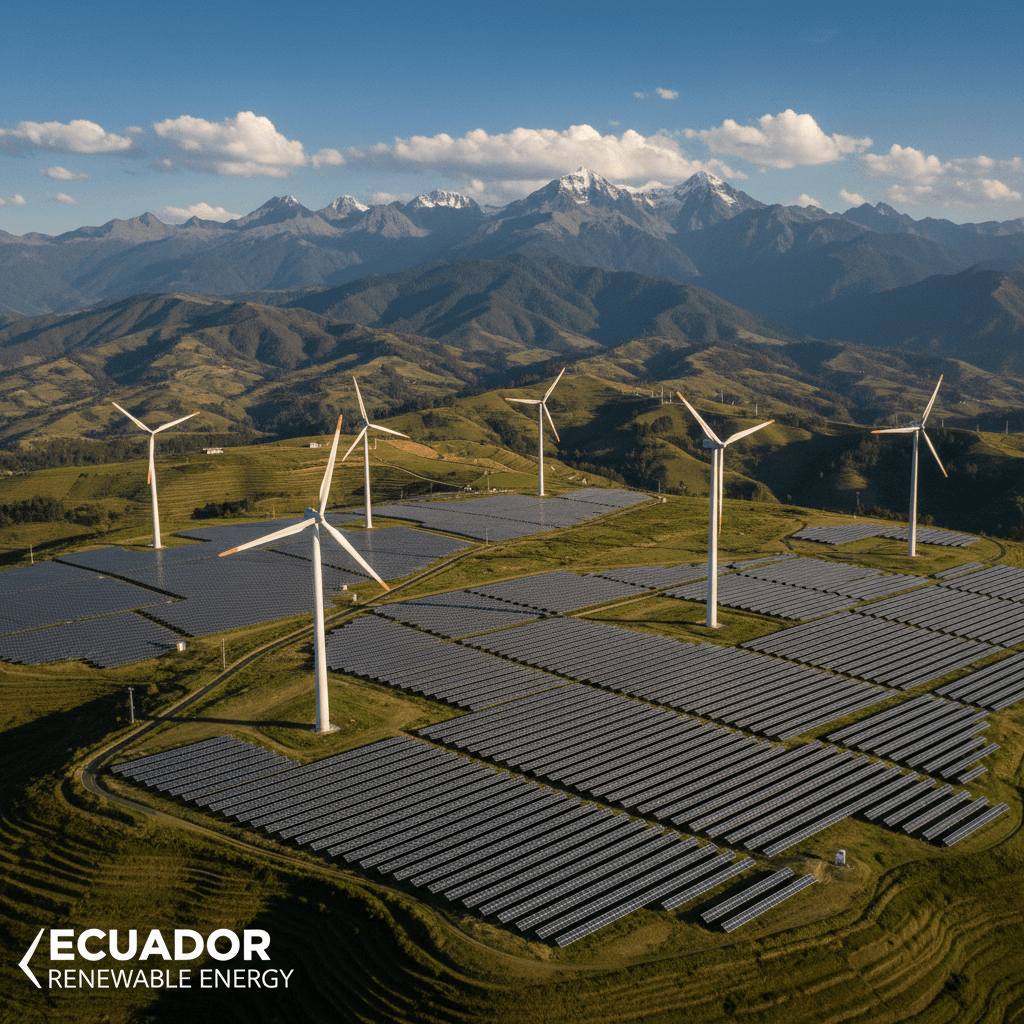
If you lived in Cuenca during the 2024 energy crisis, you remember it viscerally. Rolling blackouts of up to 14 hours a day. Candles, generators, spoiled food, businesses closing early, traffic lights out, hospitals scrambling. Ecuador's over-reliance on hydropower — which provides 79% of the country's electricity — met its match when a historic drought drained the reservoirs.
The government says it has a plan to make sure that never happens again. Here's what's in it, and whether you should be optimistic.
The Plan at a Glance
Ecuador's 2025–2030 Electric Power Expansion Plan commits $2.43 billion to building 1,471 megawatts of new generation capacity. The breakdown:
| Source | New Capacity | Investment |
|---|---|---|
| Solar | 963 MW | $913 million |
| Hydroelectric | Various projects | $1.3+ billion |
| Wind | 150–200 MW | $300 million |
| Geothermal | Exploration phase | TBD |
The big story here is solar. Ecuador has historically ignored solar power despite sitting on the equator — literally the best possible location for solar panels. The plan finally addresses this with nearly 1 GW of solar capacity, which would be a massive shift for the country's energy mix.
The Mega-Projects
Two hydroelectric projects dominate the long-term pipeline:
- Cardenillo — 595 MW, $1.326 billion. Located on the Paute River in the Azuay/Morona Santiago border area. This has been planned for years but keeps getting delayed.
- Santiago — 2,400 MW, $3.63 billion. A massive dam project that would be Ecuador's largest power plant. Still in planning/financing stages.
There's also the Pimo wind project (150–200 MW, $300 million) and a combined cycle natural gas plant ($600 million) that would serve as backup when renewables underperform.
Why Solar Changes Everything
The 2024 crisis happened because Ecuador put almost all its eggs in the hydro basket. When it doesn't rain, the dams don't fill, and the country goes dark.
Solar fixes this in two ways:
- It produces power during dry season. Drought = less rain = more sunshine = more solar output. It's naturally counter-cyclical to hydro.
- It's fast to build. A solar farm can go from approval to operation in 12-18 months. A new dam takes 8-10 years.
If Ecuador actually builds 963 MW of solar, the next drought won't automatically mean blackouts. That's the theory, anyway.
The Skepticism
Ecuador has announced ambitious energy plans before. The Coca Codo Sinclair dam — the country's largest — was supposed to solve the energy problem when it opened in 2016. It didn't, partly because of design issues, partly because demand kept growing, and partly because it's another hydro project subject to the same drought risk.
Key concerns:
- Financing. $2.43 billion is a lot for a country with a fiscal deficit and public debt at 49% of GDP. Where does the money come from?
- Execution timeline. If the solar projects don't break ground in 2026, they won't be online before the next potential drought cycle.
- Grid infrastructure. You can build all the solar farms you want, but if the transmission grid can't handle distributed generation, the power doesn't reach homes.
- Political continuity. Energy policy in Ecuador changes with administrations. Noboa's priorities may not survive the next election cycle.
What This Means for Cuenca
Cuenca was hit hard in 2024, but the Azuay region also has advantages:
- The Paute dam complex (which includes the planned Cardenillo expansion) is essentially in Cuenca's backyard
- The region's geography is suitable for both wind and solar installations
- Local demand is growing but more manageable than Guayaquil or Quito
The honest answer: you should still own a generator or UPS if blackouts concern you. The plan is credible on paper, but even optimistic timelines put significant new capacity at 2028-2029. Between now and then, another bad drought season could mean another crisis.
The good news is that Ecuador is finally talking seriously about diversification instead of just building more dams. Whether they follow through is the $2.43 billion question.
Sources: New Energy Events, AS/COA, U.S. Trade Department, World Bank
Need visa help? Talk to EcuaPass.
Retirement, professional & investor visas — handled start to finish.
Daily Cuenca News
The stories that matter for expats in Cuenca, delivered daily. No spam — unsubscribe anytime.
Join expats across Cuenca. We respect your privacy.