What Is Mote Pata? Cuenca's Carnival Dish, Explained — And Where to Eat It This Week
 Chip Moreno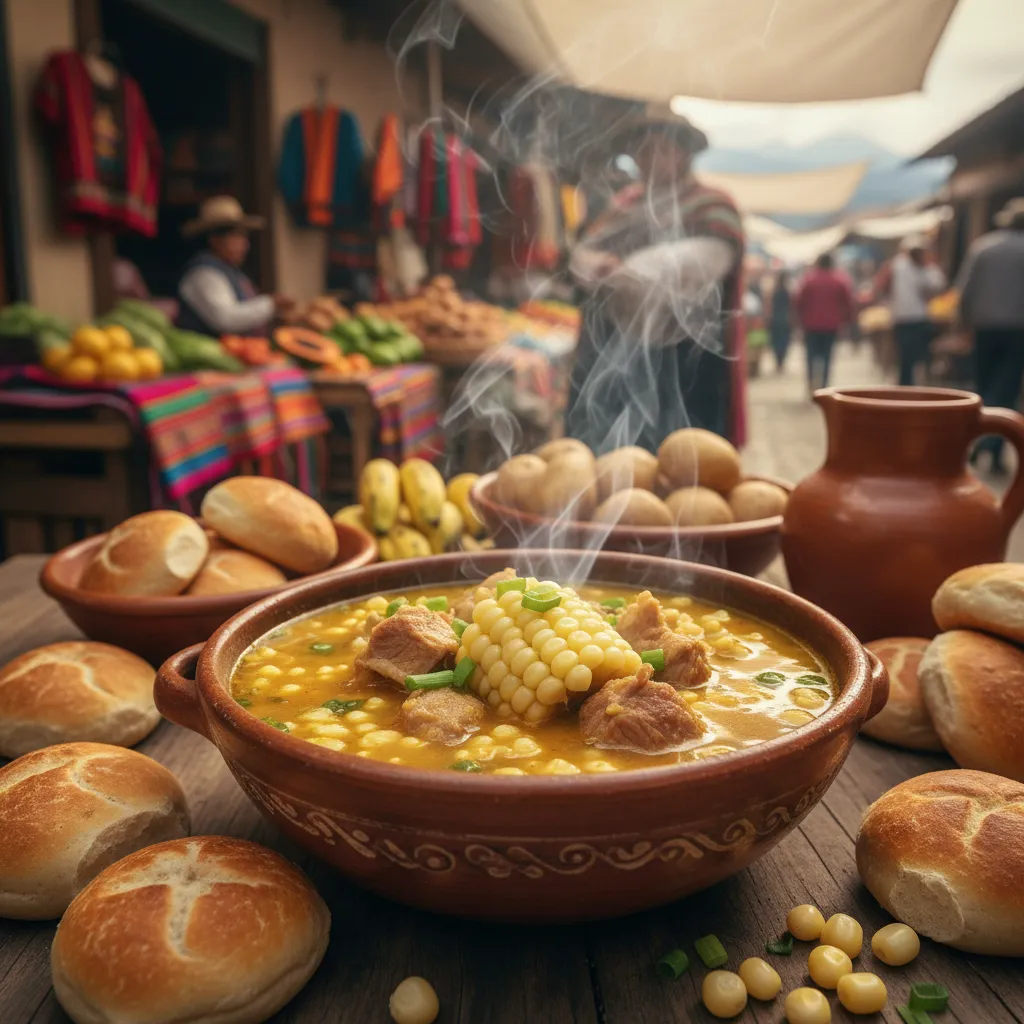
GET YOUR ECUADOR VISA HANDLED BY EXPERTS
Trusted by 2,000+ expats • Retirement • Professional • Investor visas
Every culture has a dish that only shows up once a year, and when it does, the whole city revolves around it. In Cuenca, that dish is mote pata — and Carnival is when it takes center stage.
You'll see it at every market, smell it on every block in El Centro, and hear people arguing about whose grandmother makes it best. If you've been curious but never tried it, this is the week. Here's everything you need to know.
What Is Mote Pata?
Mote pata is a thick, hearty pork and corn soup that's been the centerpiece of Carnival celebrations in Cuenca for generations. Despite what the name might suggest to English speakers, it has nothing to do with animal feet.
The name comes from Kañari (the pre-Inca indigenous language of the Azuay region):
- "Mote" comes from muti — cooked corn
- "Pata" comes from patazhca — meaning "recooked corn"
So mote pata literally means "twice-cooked corn" — which is exactly how it's prepared. The corn is soaked, peeled, boiled, and then simmered again in a rich pork broth until the kernels break down and thicken the soup into something closer to a stew.
What's In It?
According to culinary researcher Nidya Vázquez, a proper mote pata requires:
- Peeled mote (hominy corn, without the skin)
- Smoked pork — this is the signature flavor
- Pork loin, chorizo, and bacon
- Squash seeds (pepas de zambo) — ground into a paste that gives the broth its distinctive body
- Refrito — the aromatic base of onion, garlic, cumin, achiote, and pepper sautéed in oil
- Milk — added at the end for richness
- Salt, cumin, pepper, achiote, garlic
The dish is slow-cooked — the corn alone takes 4 to 5 hours after soaking. Market vendors start the night before. If you've ever wondered why it tastes like it does, it's because somebody stood over a pot for half a day.
Where to Eat It
At the Markets — $3.50
The most authentic (and affordable) option. Market vendors have been selling mote pata in the lead-up to Carnival for the past two weeks, and they'll keep going through the Sunday after the holiday.
Your best bet:
- Mercado 10 de Agosto (El Centro) — Look for vendors María José Arévalo, Elizabeth Carvallo, and Cecilia Guamán, who run dedicated mote pata stalls during the season. A bowl runs about $3.50.
- Mercado 9 de Octubre — Also has Carnival food vendors, including dulces (fruit sweets in spiced syrup) for about $1.00 per container.
At Restaurants
If you want the sit-down experience:
- El Mercado — Ranked among Ecuador's best restaurants. They serve mote pata during Carnival alongside traditional tamales and morcilla (blood sausage). Not cheap, but excellent.
- LaMaría — Describes their mote pata as "memory, fiesta, and shared table." They lean into the cultural significance of the dish.
- La Chichería — Traditional recipe in a more casual, local-focused setting.
At Plaza de San Francisco — Saturday
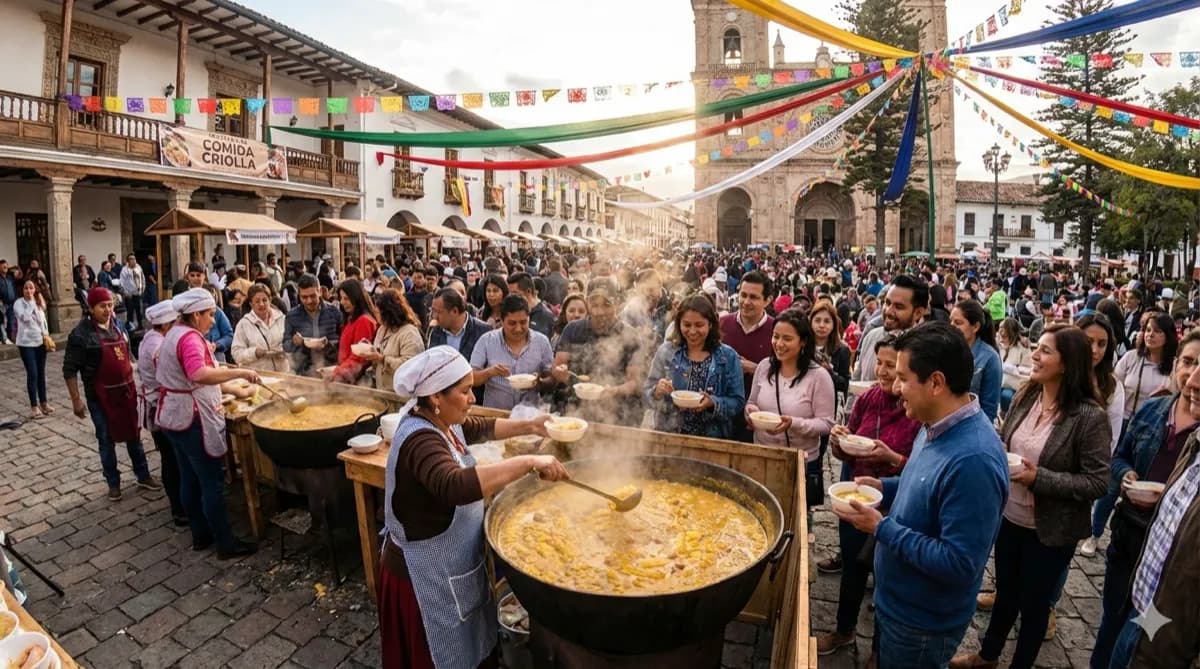
The city is attempting a Guinness World Record for the largest mote pata serving ever made at 2:00 PM on Saturday, February 14 at Plaza de San Francisco. Whether or not they break the record, you'll get to taste it.
The Carnival Bread and Sweets
Mote pata doesn't come alone. The full Carnival spread includes:
- Pan de Carnaval — dense, lard-based bread baked in wood-burning ovens. The Todos Santos bakery district near Parque de las Flores has doubled production for the holiday.
- Dulces de Carnaval — fruits preserved in spiced syrup, in flavors like fig (higo), milk (leche), and peach (durazno). Find them at market stalls for about $1.
Why It Matters
Mote pata isn't just food — it's a social ritual. Families make it together. Neighborhoods share it. The act of cooking mote pata is the celebration, as much as eating it.
As every market vendor will tell you, the secret ingredient is "cocinar con amor" — cooking with love. That sounds cheesy until you taste the difference between a bowl made by someone who's been doing this for 30 years and one from a restaurant trying to replicate it.
This is one of those experiences that makes living in Cuenca different from visiting. Go to the market. Order a bowl. Sit down with whoever's sitting next to you. That's Carnival.
Sources: Primicias, CuencaHighLife

Chip Moreno
The Cuenca Expat editorial team covers news, lifestyle, and practical information for the expat community in Cuenca, Ecuador.
Planning your move to Cuenca? EcuaPass can help.
EcuaPass.com — Visa & residency processing for Ecuador
EcuaPass
Your Ecuador Visa, Done Right
Retirement • Professional • Investor • Cedula processing & renewals — start to finish by licensed experts.
Get a Free Consultationecuapass.com
Daily Cuenca News
The stories that matter for expats in Cuenca, delivered daily. No spam — unsubscribe anytime.
Join expats across Cuenca. We respect your privacy.