Noboa's Emergency Law Could Gut Cuenca's City Budget — and Azuay Is Fighting Back
 Chip Moreno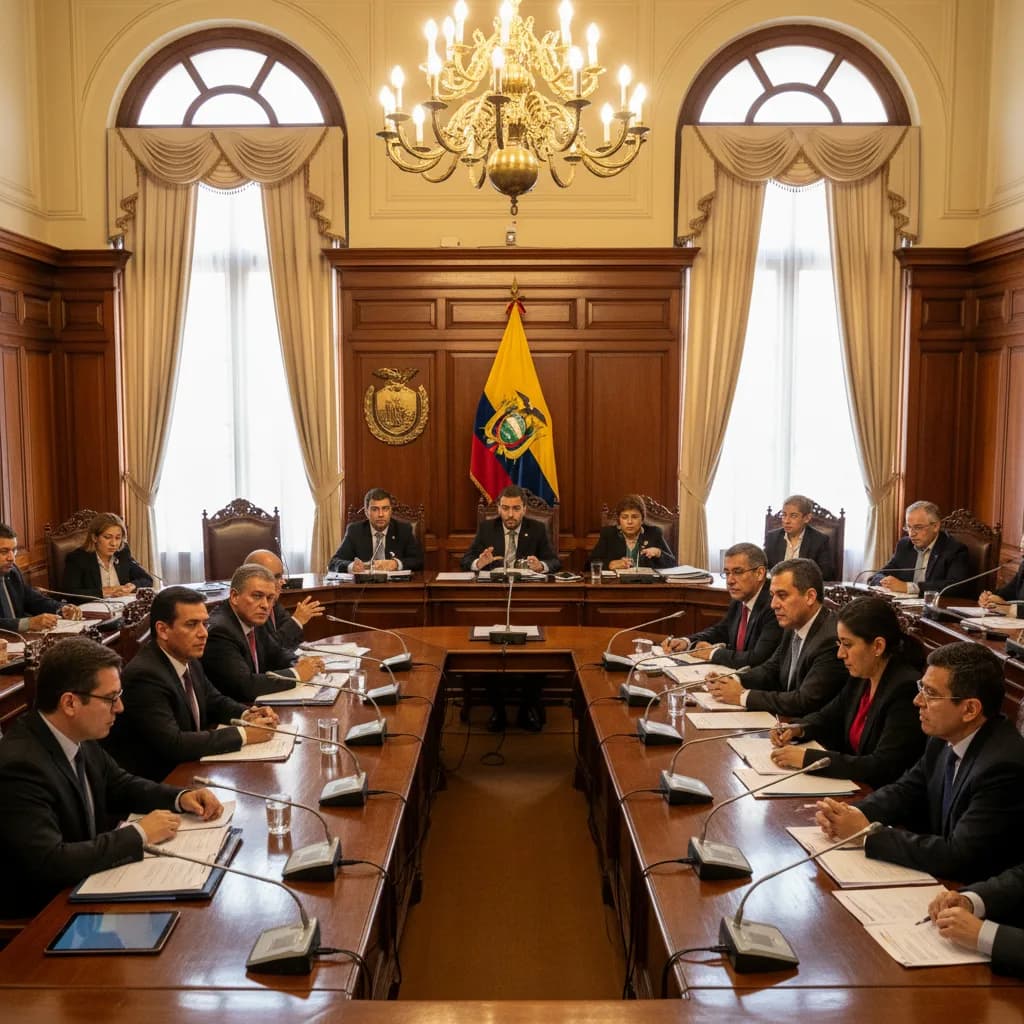
A political fight brewing in Quito could directly affect how Cuenca spends its money — and what city services look like for the next few years.
What's Happening
President Daniel Noboa has submitted an emergency economic law (ley urgente en materia económica) to the National Assembly that would fundamentally change how local governments spend their budgets.
The key provision: municipalities and prefectures would be required to dedicate a minimum of 70% of their budgets to infrastructure investment — roads, bridges, water systems, construction.
That sounds reasonable until you think about what gets cut to hit 70%.
What Gets Squeezed
Municipal budgets fund far more than construction projects. They pay for:
- Social programs — community centers, youth programs, senior services
- Operational staff — the people who actually run city services day-to-day
- Public safety supplements — Cuenca's Guardia Ciudadana, neighborhood alarm systems, surveillance cameras
- Cultural programming — museums, libraries, events (yes, including Carnival)
- Environmental programs — páramo protection, recycling, watershed management
If 70% must go to infrastructure, the remaining 30% has to cover everything else. Mayors say that's not mathematically feasible without gutting services.
Azuay Is Pushing Back
The Prefectura del Azuay is among the local governments openly opposing the law, joining prefectures from Pichincha (Quito) and Guayas (Guayaquil) — Ecuador's three most important provinces.
Quito's mayor led a public march against the proposal. The core arguments:
- The government owes municipalities approximately $1 billion in transfers. The law would allegedly dissolve that debt — meaning local governments lose money they're already owed.
- One-size-fits-all doesn't work. Rural cantons with minimal infrastructure need construction spending. Cities like Cuenca that already have solid infrastructure need operational and social investment.
- It's a power grab. Critics say the law centralizes control by dictating local spending priorities from Quito.
What This Could Mean for Cuenca
If the law passes as written, expect pressure on:
- Guardia Ciudadana and security programs — Cuenca just invested in 90 new cameras and 400 community alarms. Sustaining and expanding these programs requires operational (not infrastructure) spending.
- ETAPA programs — watershed protection, community forest brigades, páramo conservation
- Cultural events and tourism promotion — the $700,000+ Carnival budget, for example
- Social services — programs for seniors, women's support centers (Centro Violeta just had to relocate due to structural damage), community development
The counterargument: more infrastructure spending could accelerate road repairs, water system expansion to rural parishes, and other physical improvements that directly benefit residents.
Where Things Stand
The law is before the National Assembly, where Noboa's political coalition (ADN) is essentially tied 66-66 with the opposition (led by Rafael Correa's Revolución Ciudadana). Getting it passed won't be easy.
This is also the start of campaign season — sectional elections (mayors and prefects) are in February 2027. Every municipal leader is thinking about how budget constraints will affect their ability to deliver results before voters go to the polls.
Worth watching.
Source: Primicias
More in News
View all →Need visa help? Talk to EcuaPass.
Retirement, professional & investor visas — handled start to finish.