This Ecuadorian Family Is Rebuilding the Amazon One Rescued Seed at a Time — and Nobody's Helping Them
 Chip Moreno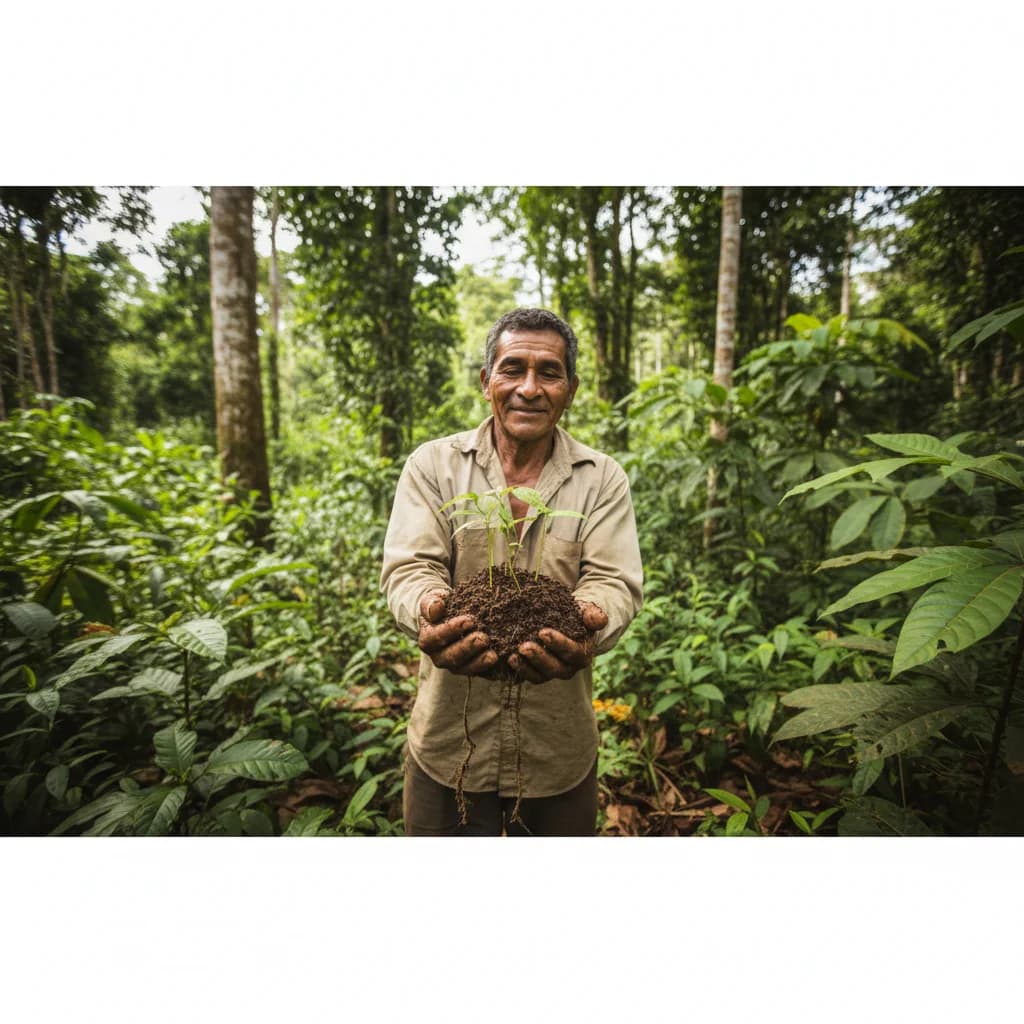
GET YOUR ECUADOR VISA HANDLED BY EXPERTS
Trusted by 2,000+ expats • Retirement • Professional • Investor visas
Deep in the Amazon lowlands, about 128 kilometers southeast of Quito, a 51-year-old man named Ramón Pucha regularly disappears into the jungle for up to five days at a time. He goes alone. He's looking for seeds.
Not just any seeds — seeds from some of the most endangered plant species on Earth, trees that have been decimated by 50 years of relentless logging in Ecuador's Amazon basin. Pucha finds them, collects them, and brings them back to his family's 32-hectare farm, where they get a second chance at life.
El Picaflor: A Family-Built Seed Bank
The farm is called El Picaflor (The Hummingbird), and it sits in the Indigenous Quichua community of Alto Ila. What was once barren pastureland — stripped by decades of logging — is now a regenerated patch of forest, rebuilt entirely by the Pucha family.
Here's how it works:
- Ramón treks into what's left of the surrounding old-growth jungle, sometimes for days, collecting seeds from trees that may be among the last of their species
- Marlene Chiluisa, his wife, plants the seeds in soil and compost back at the farm, nurturing them through germination
- Jhoel, their 21-year-old son and a trained botanist, leads visitors through the property, ferrying them across the Ila River on wooden planks lashed to a buoy
The family also gives plants to neighbors who commit to forest regeneration on their own land — slowly expanding the reach of their work beyond El Picaflor's borders.
A "Living Laboratory" with Zero Funding
Ecuador's Ministry of Agriculture and Livestock officially recognizes El Picaflor as a "living laboratory" and a vital seed bank in an area scarred by half a century of deforestation. That's a nice title.
But titles don't pay bills.
"Nobody gives us any incentive — not the government, not foundations, not anyone," says Marlene Chiluisa.
The Pucha family funds their conservation work entirely on their own. No government grants. No NGO backing. No foundation support. Just a family that believes in what they're doing.
"That is my legacy for my children and for humanity," Pucha says.
His neighbors think he's crazy. He's heard it enough times that it doesn't bother him anymore. "I have a passion for nature, for plants, for animals," he says simply.
The Bigger Problem: Ecuador's Environmental Rollback
The Pucha family's story is inspiring on its own, but it hits harder when you zoom out.
Ecuador was the first country in the world to enshrine the "rights of nature" in its constitution — a landmark legal framework that made international headlines. But under President Daniel Noboa, that reputation is under threat.
Noboa's administration merged the Ministry of Environment with the Ministry of Energy and Mines — a move that environmentalists and Indigenous groups say is a devastating conflict of interest. The agency tasked with protecting Ecuador's forests now shares a roof with the agency tasked with extracting resources from them.
Meanwhile, climate change is compounding the damage. Severe regional droughts have disrupted the natural seed cycles of large trees, meaning many species have stopped producing seeds annually. The window for collection is shrinking.
Why This Matters from Cuenca
You might be wondering what an Amazon seed bank has to do with life in Cuenca. A few things:
- Cuenca's water comes from Cajas National Park, which faces its own ecological pressures. The principle is the same: small-scale conservation by committed people is what actually protects these ecosystems.
- Many expats in Cuenca care deeply about Ecuador's environment — it's part of why they moved here. Supporting families like the Puchas (or at least knowing their story) matters.
- Ecuador's environmental credibility affects all of us. If the country's "rights of nature" framework gets hollowed out, it weakens the legal protections for places like Cajas, the cloud forests, and the páramo that Cuenca depends on.
The Pucha family isn't waiting for permission or funding. They're just doing it — one seed, one tree, one day in the jungle at a time. In a country where the politics of conservation are getting murkier, that kind of stubborn, unglamorous work might be the most important thing happening.
Sources: Associated Press (via Euronews), CuencaHighLife
Chip Moreno
The Cuenca Expat editorial team covers news, lifestyle, and practical information for the expat community in Cuenca, Ecuador.
Planning your move to Cuenca? EcuaPass can help.
EcuaPass.com — Visa & residency processing for Ecuador
EcuaPass
Your Ecuador Visa, Done Right
Retirement • Professional • Investor • Cedula processing & renewals — start to finish by licensed experts.
Get a Free Consultationecuapass.com
Daily Cuenca News
The stories that matter for expats in Cuenca, delivered daily. No spam — unsubscribe anytime.
Join expats across Cuenca. We respect your privacy.