Cuenca's Carnival by the Numbers: 90% Hotel Occupancy, $100 Million Weekend, and 1.3 Million Travelers
 Chip Moreno
If you tried to get a dinner reservation Saturday night and got laughed at, or if your usual quiet street suddenly had bumper-to-bumper traffic and strangers with water balloons — now you know why.
Cuenca's Carnival 2026 weekend was, by every available measure, the biggest tourism event the city has hosted in recent memory.
The National Numbers
The Ecuadorian government's tourism ministry projected the four-day Carnival feriado (February 14-17) would mobilize over 1.3 million domestic travelers across the country. Early indications suggest they hit or exceeded that number.
Here's the economic snapshot:
| Metric | 2026 Projection | 2025 Actual |
|---|---|---|
| Direct tourism spending | $80-100 million | $73 million |
| National hotel occupancy | 54%+ | 50% |
| Domestic travelers | 1.3 million+ | ~1.1 million |
| Police deployed | 46,748 | N/A |
The Vice Minister of Tourism projected $80 million in direct spending, while FENACAPTUR (the national tourism chamber) put the estimate closer to $100 million. When you include indirect economic impact — taxi rides, grocery runs, gas fill-ups, artisan purchases — the total economic movement could reach $160 million.
Cuenca's Piece of the Pie
Cuenca was one of the top Carnival destinations, competing with beach towns like Montañita, Salinas, and Playas, plus Ambato (which hosts the famous Flowers and Fruits Festival) and Guaranda (Ecuador's Carnival capital).
Local numbers for Cuenca:
- Hotel occupancy: approximately 90% — nearly every bed in the city was booked
- 13,000+ hotel beds across all categories were available, and most were filled
- 600+ registered restaurants and cafés saw peak traffic
- The IVA reduction to 8% (down from 15%) on tourism services helped incentivize spending at registered establishments
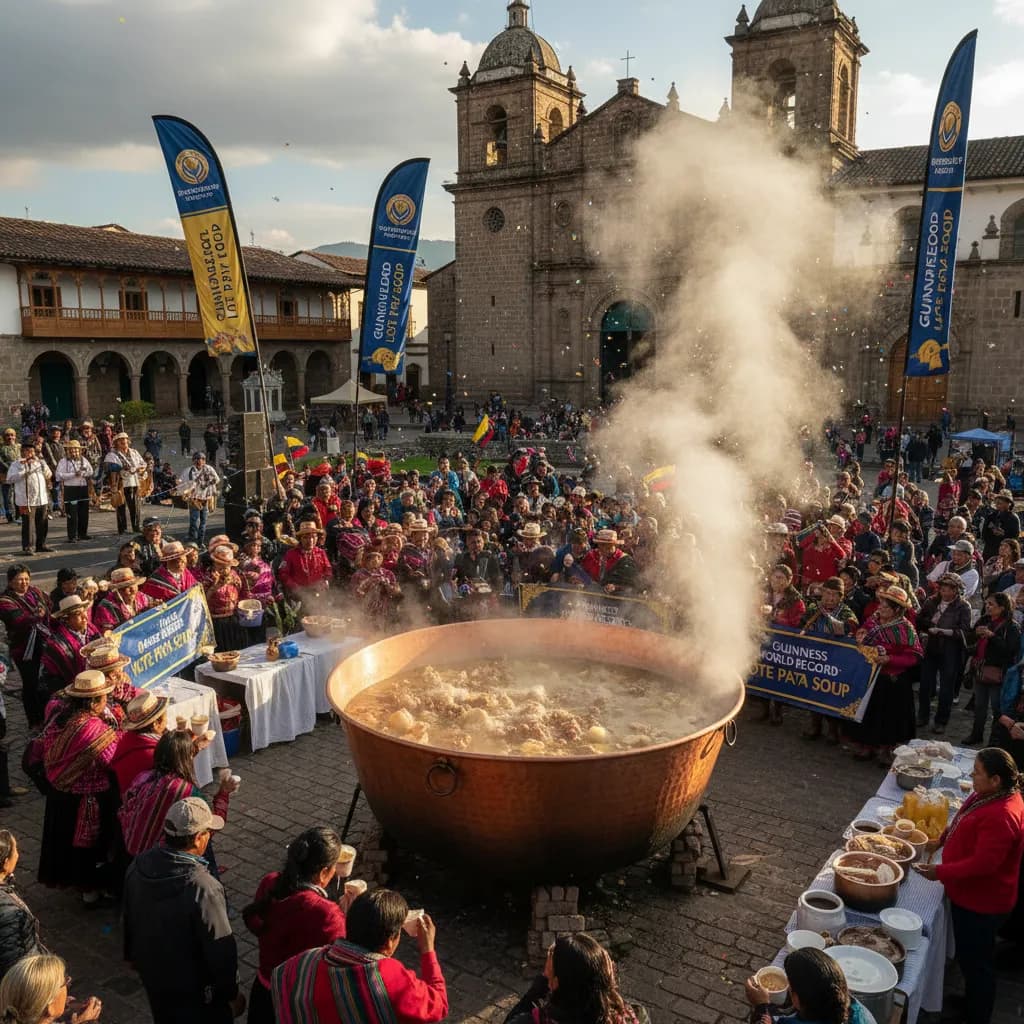
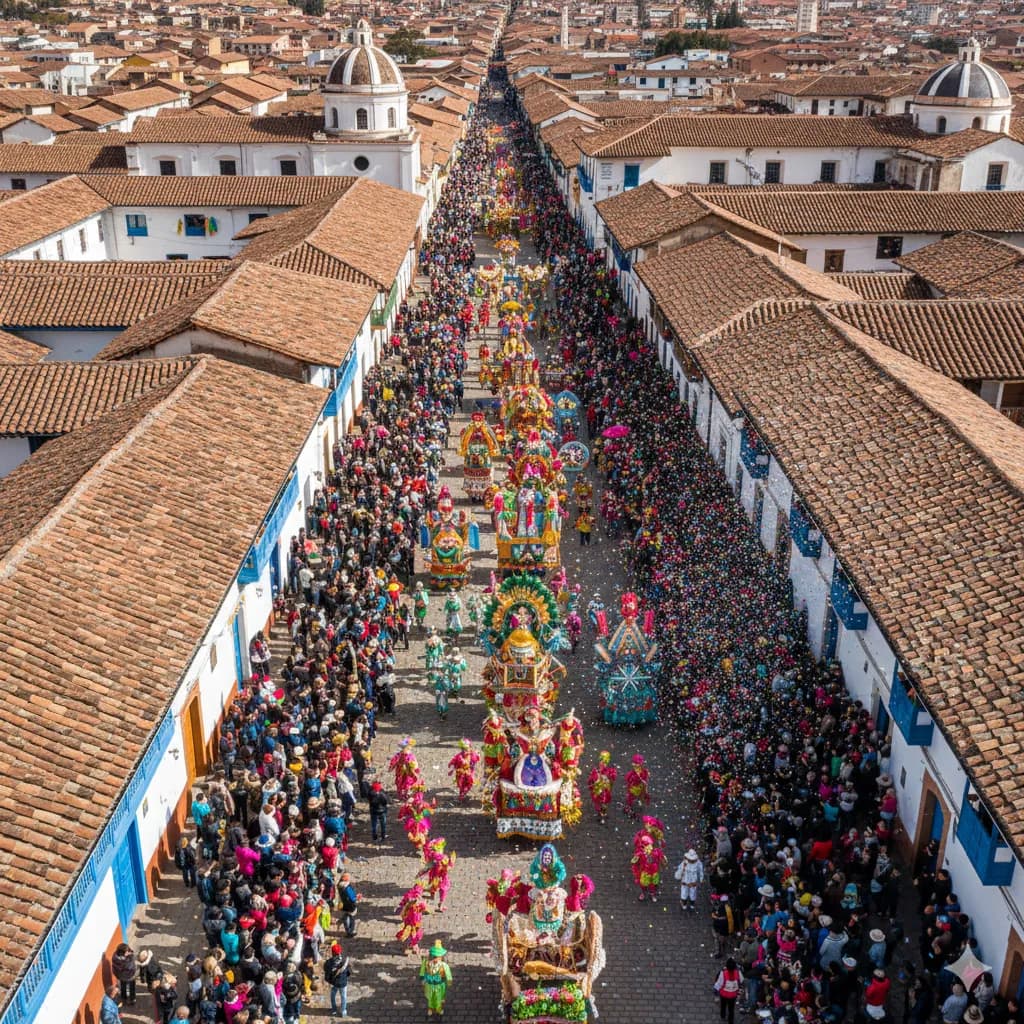
If you walked through El Centro on Saturday, you saw it firsthand — the Four Rivers Parade rolled down Calle Bolívar, the Guinness World Record mote pata fed 9,500 people at Plaza San Francisco, and Nicky Jam packed the Alejandro Serrano Aguilar stadium that night.
Where the Money Went
Carnival spending in Cuenca breaks down roughly like this:
- Accommodation — Hotels, hostels, Airbnbs. Everything from the $385/night Mansión Alcázar Valentine's package to $25 hostel beds in El Centro
- Food and drink — Restaurants got the biggest boost, especially with the 8% IVA incentive. Traditional Carnival food (mote pata, cuy, tamales) and upscale dining both surged
- Transportation — Bus terminals were packed for days leading up to the feriado. Interprovincial bus companies added extra routes. Gas stations on the Cuenca-Guayaquil and Cuenca-Machala highways were slammed
- Events and entertainment — Concert tickets ($5-$35 for the Nicky Jam show), artisan fairs organized by EDEC at three locations, and the GAD Municipal's 80+ free events across the city
- Retail — Artisan markets at Rotary, Plaza de las Flores, and the Carnival edition fairs did brisk business
The $700,000 Question
The city spent over $700,000 on the entire Carnival programming — concerts, parades, the Guinness attempt, security, logistics, and the "Yo Cuido el Páramo" environmental campaign. Was it worth it?
The math says yes. If Cuenca captured even 10% of the national $100 million projection, that's $10 million in local economic activity against a $700,000 public investment. The Guinness World Record alone generated international press coverage you can't buy.
What the IVA Discount Meant
A quick reminder: if you ate out or stayed at a hotel this weekend, you may have paid less tax than usual. The government's Decreto Ejecutivo 304 dropped VAT from 15% to 8% on tourism services from February 14-17.
That 7-point reduction applies to:
- Restaurants and cafés
- Hotels and hostels
- Tour operators and guides
- Spas and recreation centers
- Event venues and convention centers
- Tourist transportation (including car rentals)
The catch: only establishments registered in the national tourism registry with a valid Tourism Registration and Annual Operating License qualify. Your favorite hole-in-the-wall almuerzo spot probably isn't registered. The nicer restaurants and all major hotels almost certainly are.
The discount runs through tomorrow (Tuesday, February 17) — so if you haven't taken advantage yet, tonight's dinner is your last chance.
Cuenca vs. the Competition
For context, here's how Cuenca stacked up against other major Carnival destinations:
- Playas (coast): 80% hotel occupancy with concerts through Feb 17
- Ambato: 54th Flowers and Fruits Festival drew massive crowds
- Guaranda: Ecuador's traditional Carnival capital, known for the wildest water celebrations
- Montañita/Salinas: Beach party scene, heavy international tourist traffic
Cuenca's advantage is that it offers something different — culture, gastronomy, history, and a world record — rather than competing on nightlife or beach access. The 90% occupancy rate suggests the strategy is working.
Looking Ahead
The next major feriado isn't until Good Friday and Easter (April 3-5), which gives Cuenca about six weeks to catch its breath. But the Carnival numbers send a clear signal: tourism is becoming a serious economic engine for the city, and the investment in events and cultural programming is paying off.
For those of us who live here, the tradeoff is obvious — a few days of packed restaurants, water balloons, and traffic chaos in exchange for a stronger local economy. Seems like a fair deal.
Sources: Expreso, FENACAPTUR, Ministerio de Turismo, GAD Municipal de Cuenca