The US and Ecuador Just Wrapped a Trade Deal — Here's What It Means for Your Grocery Bill
 Chip Moreno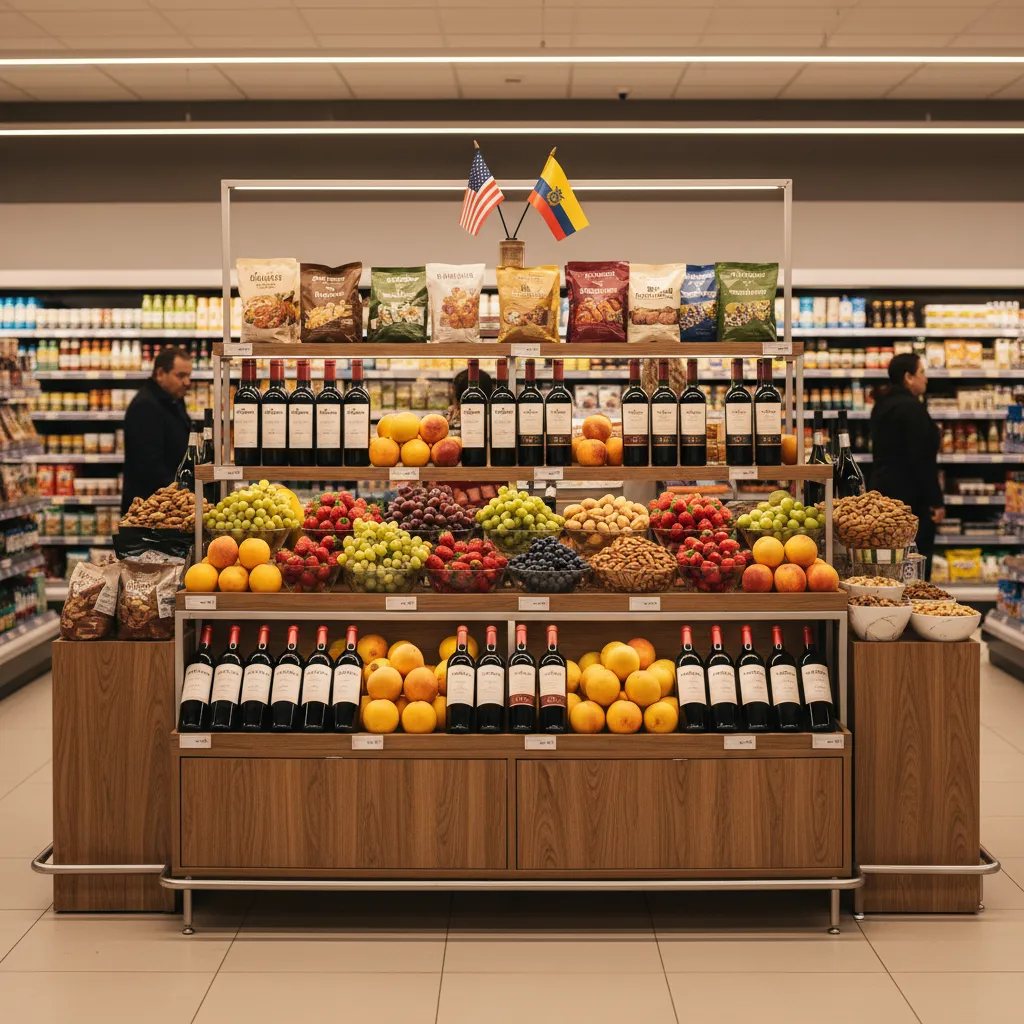
If you've ever stood in the wine aisle at Supermaxi and winced at the price of a California Cabernet — or wondered why a bag of almonds costs three times what it does at Costco back home — there might be relief on the horizon.
On February 13, 2026, the United States Trade Representative (USTR) announced that the US and Ecuador have "substantially concluded" negotiations for an Agreement on Reciprocal Trade (ART). The deal is expected to be formally signed in the coming weeks.
What's in the Deal
The agreement covers a wide range of goods and policies, but here's what matters most to everyday life in Cuenca:
Lower Prices on Imported Goods
Ecuador has agreed to reduce or eliminate tariffs on key US exports including:
- Wine and distilled spirits — currently taxed heavily at import
- Tree nuts (almonds, walnuts, pecans) — a staple for many expats
- Fresh fruit — including varieties not grown locally in Ecuador
- Wheat — which affects bread and baked goods prices
- Pulses (lentils, chickpeas) — increasingly popular in Cuenca's health food scene
- Machinery and ICT equipment — which could lower costs for businesses
- Health and personal care products — medications and supplements
Ecuador will also fully eliminate its variable tariffs imposed through the Andean Price Band System — a pricing mechanism that has historically inflated the cost of imported agricultural products.
Simplified Import Processes
The deal includes reforms to Ecuador's import licensing and facility registration systems for food and agricultural products. If you've ever wondered why certain American products are available in Quito but not Cuenca, or why they appear and disappear from shelves — bureaucratic import barriers are often the reason.
Digital Trade Protections
Ecuador committed to not imposing digital service taxes that discriminate against US companies. This protects services like Netflix, Spotify, Amazon, and cloud platforms that many expats rely on daily.
What the US Gives Back
It's not one-sided. The US will provide Most Favored Nation tariff treatment to Ecuador for qualifying goods that aren't produced domestically in the US — think roses, shrimp, bananas, cocoa, and specialty coffee. This helps Ecuador's export economy, which in turn supports the dollarized economy expats depend on.
The Bigger Picture for Expats
Beyond grocery prices, this deal matters for three structural reasons:
1. Dollarization stability. Ecuador uses the US dollar. Stronger trade ties with the US reinforce the economic logic of dollarization and reduce the (already small) risk of de-dollarization that some economists occasionally float.
2. Investment climate. A formal trade agreement signals that Ecuador is a stable, rules-based partner for US businesses. That attracts investment, creates jobs, and improves the general economic environment.
3. Geopolitical alignment. In a region where China is aggressively expanding economic influence, this deal keeps Ecuador firmly in the US economic orbit. For American expats, that alignment tends to correlate with smoother consular services, better visa reciprocity, and stronger bilateral cooperation on issues like security.
When Will You Actually See Lower Prices?
Don't rush to Supermaxi expecting discounts tomorrow. The deal still needs to be formally signed, and then tariff reductions typically phase in over months to years. Some reductions may be immediate upon signing; others will follow a schedule.
The imported wine and nuts you buy at Coral Hipermercados or Supermaxi will likely be among the first products to reflect changes, since those tariffs are the most straightforward to adjust. Processed foods and specialty items may take longer as supply chains adjust.
What to Watch
- Formal signing date — expected within weeks
- Phase-in schedule — which tariffs drop immediately vs. gradually
- Retailer pass-through — whether importers and supermarkets actually pass savings to consumers (not guaranteed)
For now, this is genuinely positive news for anyone living on a dollar budget in Ecuador. The combination of eliminated tariffs, simplified import processes, and stronger economic ties should make life incrementally but meaningfully better for the expat community.
Sources: Office of the United States Trade Representative, The White House, InsideTrade
More in News
View all →Fewer Than 10 Security Cameras Watch Cuenca's Entire Historic Center — But 63 More Are Coming
February 15, 2026
ETAPA Just Approved $58.4 Million in Projects for 2026 — Here's What's Getting Built
February 15, 2026
INAMHI Says UV Radiation Is Extreme Today — Wear Sunscreen If You're Headed to Any Carnival Events
February 13, 2026