Cuenca Real Estate in 2026: Rents Are Surging, Property Values Keep Climbing, and What Expats Need to Know
 Chip Moreno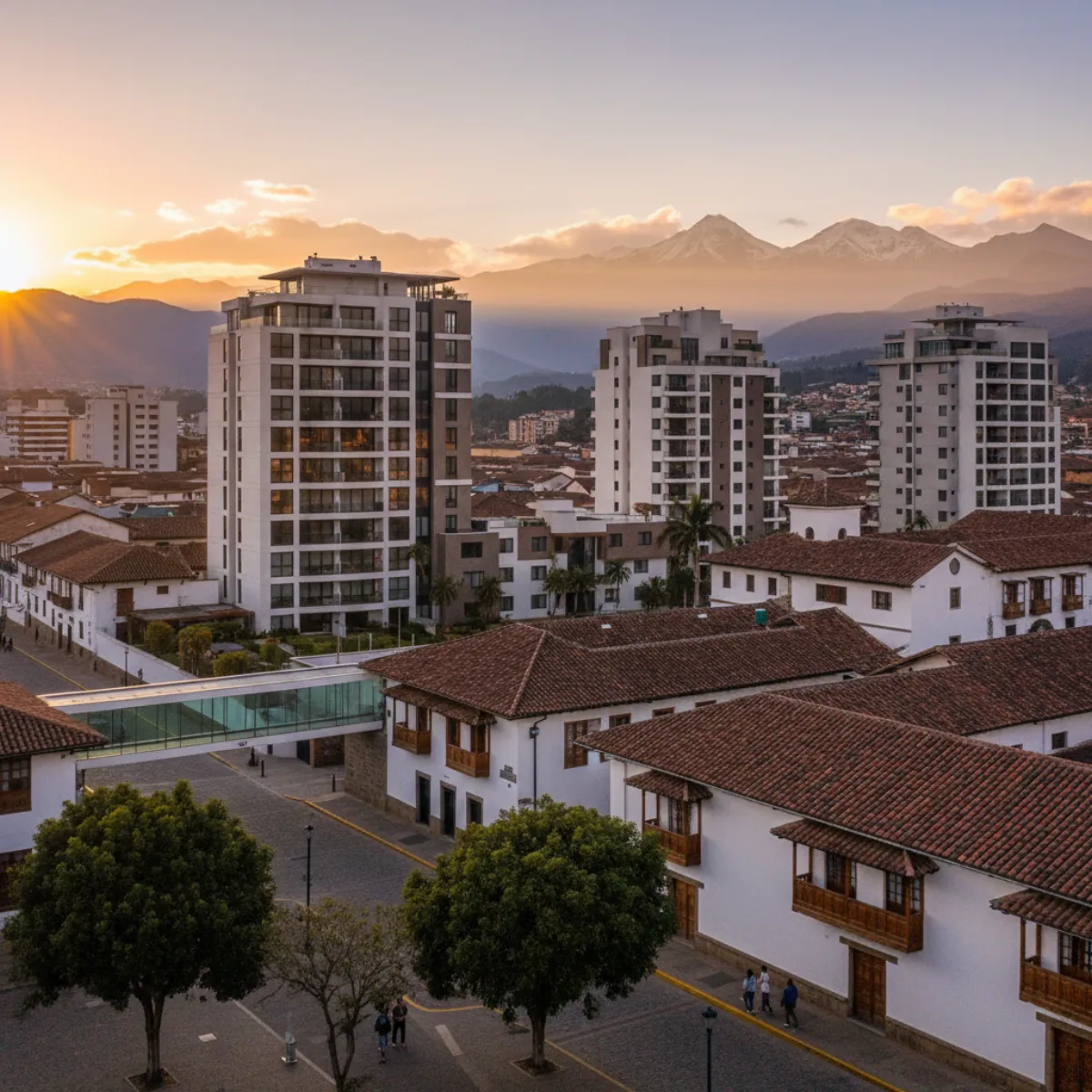
The Market That Won't Sit Still
If you arrived in Cuenca five or even three years ago and locked in a rental or bought property, congratulations — you timed it well. If you're arriving now or thinking about making a move, the math has shifted. Cuenca's real estate market in 2026 is noticeably hotter than it was even 18 months ago, and the trends suggest it's not cooling down anytime soon.
While Ecuador's national economy has faced headwinds — security concerns, political uncertainty, and the lingering effects of the energy crisis — Cuenca's property market has been operating in its own bubble. And for once, that's not entirely a bad metaphor. The fundamentals here are different from Guayaquil or Quito, driven by a unique mix of local demand, expat interest, and geographic constraints that limit new supply.
Let's dig into what's actually happening.
Property Values: 8-12% Annual Growth
Across Cuenca's most desirable neighborhoods, property values have been appreciating at 8-12% annually. That's a significant number, especially in a dollarized economy where inflation has been modest compared to the property price jumps.
Several factors are driving this:
- Expat demand remains strong. Despite all the hand-wringing about Ecuador's security situation, Cuenca continues to attract retirees and remote workers from North America and Europe. The combination of climate, cost of living, healthcare access, and walkability is hard to replicate.
- Limited buildable land in popular areas. Cuenca sits in a mountain valley. The desirable central and river-adjacent neighborhoods can't expand outward forever. When supply is constrained and demand keeps coming, prices go up.
- Dollar-denominated economy. Ecuador's use of the U.S. dollar eliminates currency exchange risk for American and other dollar-earning buyers. You're not gambling on a peso or real devaluation wiping out your property value. What you buy for $120,000 stays denominated in dollars.
The Condo Boom
The single biggest category in Cuenca real estate right now is condominiums. New and resale condos account for an estimated 50-60% of all property sales to expats. This makes sense — condos offer security, maintenance-included living, and often come in newer buildings with amenities that appeal to the expat lifestyle.
New construction has been brisk, particularly along the Ordonez Lasso corridor heading northwest from the city center. Drive down Ordonez Lasso on any given day and you'll see multiple construction projects in various stages. The area has become the de facto expat hub, with restaurants, supermarkets (SuperMaxi, Coral), gyms, and medical facilities all within easy reach.
Prices for new condos in the Ordonez Lasso area range from roughly $1,100-1,500 per square meter, depending on the building, floor, and finishes. A typical two-bedroom, two-bathroom unit of about 90-100 square meters runs $100,000-$150,000 — still remarkably affordable by North American standards, but noticeably higher than just two or three years ago.
The Rental Market: A Tale of Two Cities
Here's where things get really interesting — and, for some expats, frustrating.
Cuenca's rental market has developed what observers are calling a "tale of two markets" dynamic. On one side, you have the furnished, expat-oriented rentals in popular neighborhoods — modern apartments with reliable hot water, decent kitchens, Wi-Fi included, maybe a view of the river or mountains. These rents have surged significantly, with one-bedroom furnished apartments in desirable areas now commonly asking $600-900 per month, and two-bedrooms pushing $800-1,200.
On the other side, the local Ecuadorian rental market remains far more affordable, with unfurnished apartments renting for a fraction of those prices. But for expats who want turnkey living — especially those who are here for a year or two and don't want to buy furniture — the expat-oriented market is the one that matters, and it's gotten expensive fast.
Why the surge? A few reasons:
- More expats arriving than quality rental inventory being added
- Landlords catching on to what the market will bear (and adjusting accordingly)
- Short-term rental platforms (Airbnb, Furnished Finder) pulling units out of the long-term market
- Inflation in construction costs making new rental stock more expensive to build
The Investor Visa Connection
One detail that's particularly relevant for expats considering a property purchase: Ecuador's investor visa allows foreign nationals to obtain residency by purchasing property with a tax-assessed value (valor catastral) above a certain threshold.
Historically, that threshold was tied to a formula based on Ecuador's basic unified salary. The commonly cited figure for years was around $42,500 in tax-assessed value. However, as of 2026, that threshold has increased to approximately $48,200 due to salary adjustments.
A critical nuance that trips people up: the tax-assessed value is almost always lower than the market price. A condo selling for $120,000 on the open market might have a tax-assessed value of $50,000-$70,000. You need to verify the catastral value before purchasing if the investor visa is your goal. Your lawyer or the seller's agent can pull this from the municipal records.
Neighborhood Guide: Where Expats Are Buying and Renting
Here's a quick rundown of the areas that matter most:
Ordonez Lasso / Rio Amarillo: The expat epicenter. Newest buildings, most amenities, easy access to SuperMaxi and medical facilities. Highest prices, but also the most "plug and play" experience for newcomers. Great if you want convenience and don't mind a more suburban feel.
El Centro (Historic Center): Beautiful colonial architecture, walking distance to everything cultural — markets, plazas, restaurants, the Tomebamba riverfront. Older buildings mean quirks (noise, limited parking, occasional plumbing adventures). Prices are moderate but trending up as renovation projects increase.
Yanuncay: South of the city center along the Yanuncay River. A bit quieter, more residential, popular with expats who want space without going fully suburban. Good value relative to Ordonez Lasso. Growing restaurant and cafe scene.
Misicata: Further west, between the city and the road to Cajas. More affordable, larger lots, a more "real Ecuador" feel. Popular with expats who want a house with a garden rather than a high-rise condo. Trade-off is distance from central amenities.
Renting vs. Buying: A Practical Framework
This is the question I get asked most often by expats considering Cuenca. Here's how I think about it:
Rent if:
- You're in your first year in Cuenca. Seriously — don't buy until you've lived here at least 12 months. Neighborhoods feel different once the honeymoon phase wears off.
- You're not sure you'll stay long-term.
- You want flexibility to travel or relocate within Ecuador.
- You don't want to deal with Ecuadorian property law, maintenance, and the occasional bureaucratic adventure.
Buy if:
- You've been here at least a year and know where you want to be.
- You're planning to stay 3+ years.
- You want the investor visa (and the property meets the catastral threshold).
- You're comfortable with the idea that real estate here is relatively illiquid — selling can take months or longer.
- The math works: if your mortgage-equivalent cost (or opportunity cost of cash) is less than rent, ownership starts making sense.
What to Watch Out For
A few honest warnings from someone who's been through the process:
- Always use a lawyer. Not your real estate agent's recommended lawyer — your own independent attorney who represents your interests. Budget $500-1,000 for legal review of a purchase.
- Verify the catastral value if the investor visa matters to you.
- Check the building's legal status. Some newer constructions don't have all their permits in order. Your lawyer should verify this.
- Understand the HOA (alicuota). Monthly building fees in condo buildings range from $30 to $150+. Ask what they cover and whether there are upcoming special assessments.
- Don't skip the inspection. Construction quality varies enormously in Cuenca. Hire someone to check plumbing, electrical, and structural elements before you commit.
- Be cautious with rental agreements. Get everything in writing — in Spanish, because that's what holds up legally. Verbal agreements about included furniture, utilities, or maintenance responsibilities will come back to haunt you.
The Big Picture
Cuenca's real estate market is in a growth phase that shows few signs of slowing. For expats who bought early, it's been a great investment. For those arriving now, the window of "incredibly cheap Ecuador" is narrowing, but the value proposition compared to North American or European cities remains compelling.
A nice two-bedroom condo with mountain views, in a walkable neighborhood with excellent healthcare nearby, for $120,000-$150,000? In a dollarized economy with no currency risk? That's still a remarkable deal by global standards. It's just not the $60,000-for-everything deal that the YouTube expat channels were promoting five years ago.
The market is maturing. Prices reflect that. And for a city as livable as Cuenca, that was probably inevitable.
Sources: The Cuenca Dispatch