US Tariffs on Ecuador Just Jumped to 15% — Here's What It Means for the Economy and Your Wallet
 Chip Moreno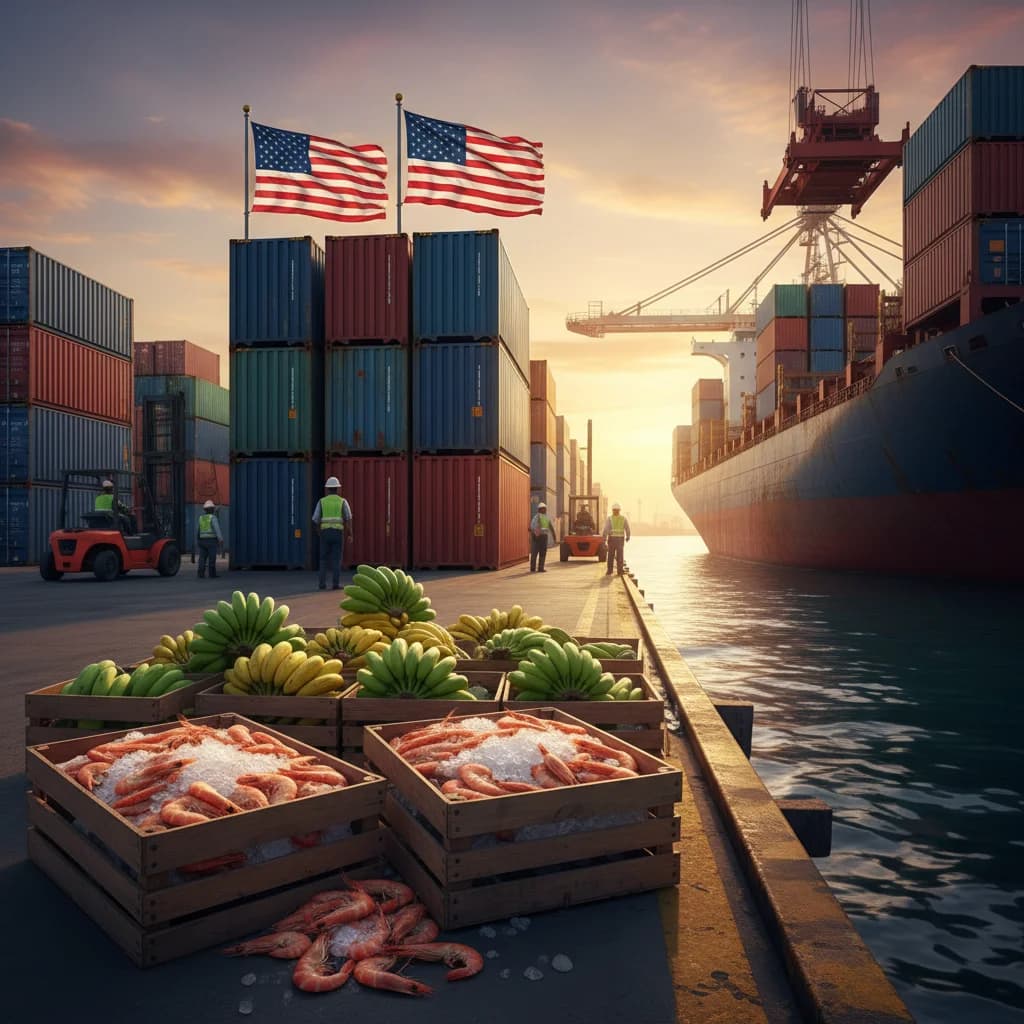
The Tariff Hammer Falls — Again
Just when Ecuador thought it had dodged the worst of America's trade war, the tariffs went up. The White House has raised general tariffs to 15% on imports from Ecuador, up from an initial 10% — and the country's most important export sectors are directly in the crosshairs.
If you're an American expat living in Cuenca, this one hits from both directions: it affects Ecuador's economy (where you live) and U.S. trade policy (where your money likely comes from).
What's Getting Taxed
The tariffs apply broadly, but Ecuador's key export sectors are most exposed:
- Shrimp — Ecuador's #1 non-petroleum export to the US
- Bananas — the country's iconic agricultural product
- Tuna — major fishing industry
- Broccoli — Ecuador is a top global exporter
- Cut flowers — another major export category
These aren't niche products. Together they represent billions in annual export revenue and employ hundreds of thousands of Ecuadorians.
Ecuador's Response
Production Minister Luis Alberto Jaramillo is trying to project calm while scrambling behind the scenes:
"We are evaluating, analyzing each step in the declarations by the United States to be prepared."
Ecuador immediately contacted the U.S. Trade Representative (USTR) for clarification and is coordinating with private sector groups representing every major export industry.
One Silver Lining: The Trade Deal Wasn't Signed Yet
Here's an unexpected advantage: Ecuador had been negotiating a reciprocal trade agreement with the US, but it hasn't been signed yet. Minister Jaramillo pointed out this actually gives Ecuador more flexibility:
"Having already made concessions in a signed agreement would be more delicate than our current situation."
In other words, Ecuador hasn't locked itself into anything — it can still negotiate from a relatively open position.
How This Could Affect You in Cuenca
Here's the "so what" for expats:
- Jobs and local economy: If shrimp, banana, and flower exports drop, that's fewer jobs and less money flowing through Ecuador's economy. That affects everything from restaurant business to construction activity.
- Dollar stability: Ecuador uses the US dollar, so there's no currency devaluation risk — but economic slowdown could mean less investment in infrastructure and services.
- Grocery prices: Ironically, if exporters can't sell abroad, more product stays in Ecuador. This could actually lower local prices for shrimp, bananas, and produce in the short term.
- Import costs: If Ecuador retaliates or renegotiates, imported American goods could become more expensive.
The Bigger Picture
Despite the tariff uncertainty, Ecuador's non-petroleum exports actually grew 30.3% last year — an impressive number. Officials believe exports could potentially double over the next five years if trade relationships stabilize.
But that's a big "if" right now. The US keeps shifting its tariff approach, and Ecuador's officials acknowledge they're watching weekly for changes.
What to Watch
- Whether Ecuador signs the trade deal on modified terms
- Shrimp industry response — this sector is the canary in the coal mine
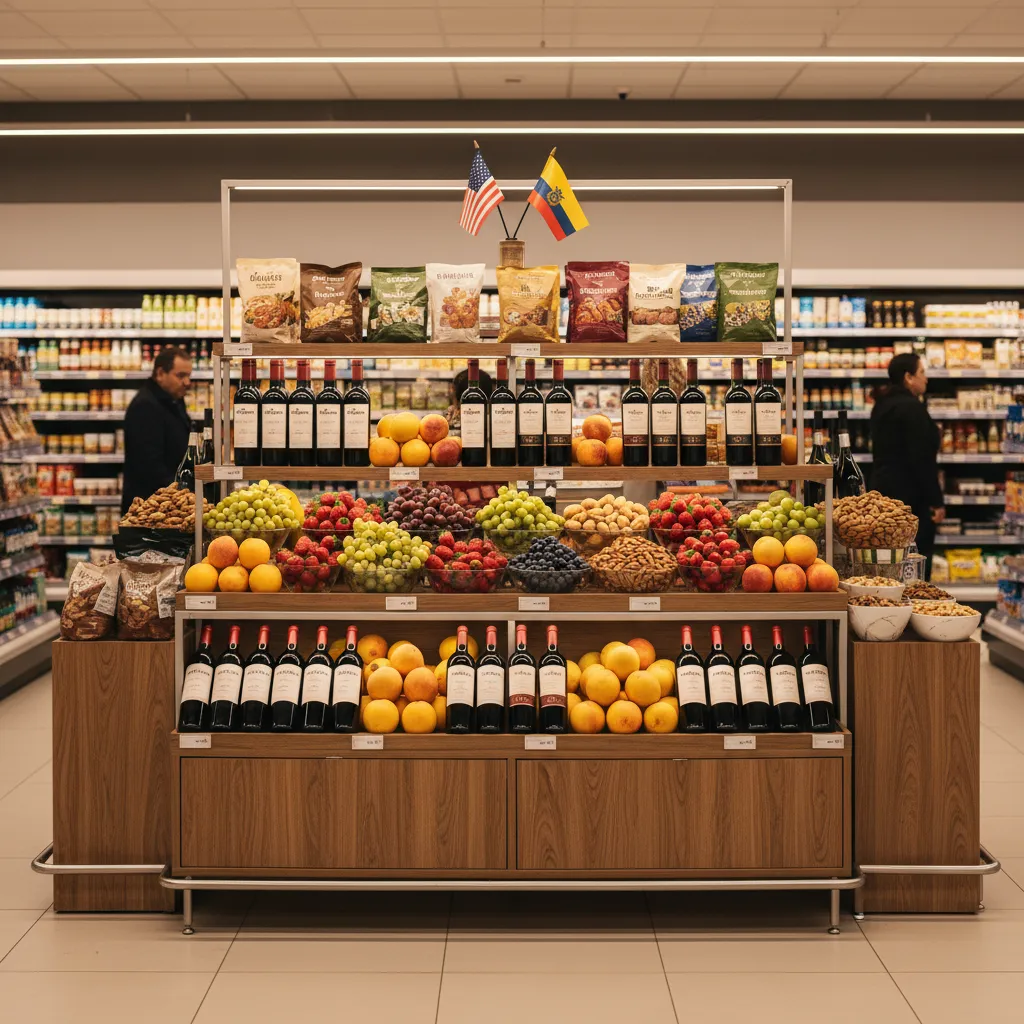
- Any changes to the cost of imported goods at Coral, Supermaxi, and other stores
- Local employment trends in export-dependent coastal regions
We'll keep you updated as this develops.
Sources: El Universo, Primicias
More in News
View all →New Law Forces Cuenca to Spend 70% on Infrastructure — Mayor Zamora Sees a "Secret Agenda"
February 23, 2026
IESS Has Hundreds of Extra Doctors — But 13,000 Patients Are Still Waiting for Surgery
February 23, 2026
Vehicle Plate Services Are Back Online in Cuenca After a Month-Long Freeze
February 23, 2026